Persimmon defies sector gloom with 15% profit rise despite market headwinds
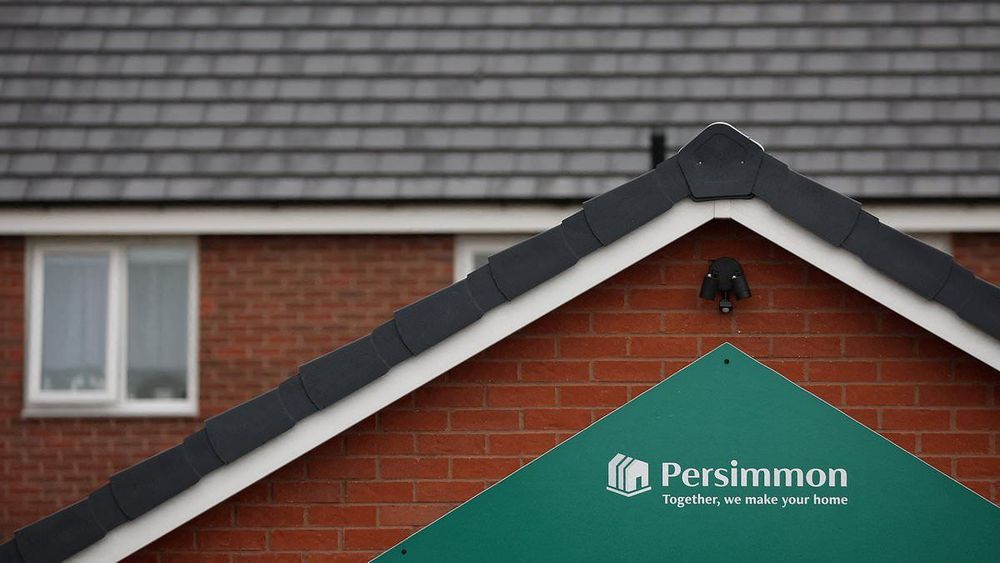
Housebuilder Persimmon has bucked the trend of sharp decline across the UK construction sector, reporting a 15% rise in profits to £168 million for the first half of 2026 and signalling confidence it will hit the upper end of its annual targets.
Chief executive Dean Finch said the company expects to complete approximately 12,500 homes this year, despite affordability pressures and rising building costs that have pushed the broader sector into one of its steepest contractions since the Covid pandemic.
The York-based firm built 5,189 homes in the six months to June, up 13% year-on-year, while revenues climbed 15% to £1.7 billion. Private sales rose 6% in the five weeks to the end of June, though the company noted that activity in the open market has softened since then.
Sector faces severe headwinds
Persimmon's performance stands in stark contrast to the wider housebuilding industry, which has faced mounting challenges throughout 2026. UK construction activity plummeted in June, with the S&P Global construction PMI recording a reading of 38.4, barely improved from May's six-year low of 38.2. The decline marked the second-fastest fall in output since the start of the pandemic.
The downturn has been driven largely by the economic fallout from conflict in the Middle East. When Israel and the United States began military strikes against Iran on 28 February 2026, the impact rippled quickly through the UK economy. Wholesale natural gas prices surged roughly 75% between late February and late March, while petrol prices jumped 14 pence per litre during the same period.
These energy price spikes translated directly into higher mortgage costs. Average two-year fixed-rate mortgage deals rose from 4.83% on 27 February to 5.63% by early August, even as the Bank of England held its base rate steady at 3.75% throughout the year.
Consumer confidence takes a hit
The conflict's impact extended beyond mortgage rates to broader consumer sentiment. UK consumer confidence fell to minus 21 in March from minus 19 in February, its lowest level in nearly a year. Households' assessment of the general economic outlook for the next 12 months dropped 6 points, while the savings rate rose by the same margin as families adopted a more cautious approach.
The housing market reflected this uncertainty. Sales agreed in July fell 9% compared to the same period in 2025, marking the weakest level of activity so far in 2026 as buyers adopted a wait-and-see stance.
Government and international bodies responded by sharply downgrading growth forecasts. The UK government cut its 2026 economic growth projection to 1.1% in March, down from 1.4% forecast in November 2025. The IMF and OECD both reduced their UK growth estimates by 0.5 percentage points, the largest downgrades of any developed economy.
Cost pressures mount
Finch acknowledged the challenging environment, warning that Persimmon expects to face £40-50 million of cost inflation over the next 18 months due to elevated material and energy costs stemming from the conflict. The company said these pressures could delay when it reaches its medium-term margin targets, despite ongoing mitigation efforts.
However, Persimmon's vertically integrated business model has provided a crucial buffer. The company owns its own brick, tile and timber-frame factories, which helped cut per-home build costs by up to £5,500 through record production at its manufacturing facilities. This cost advantage has proved valuable as the broader sector faces margin compression.
Market remains under pressure
Despite Persimmon's relative outperformance, investor sentiment toward housebuilders remains subdued. Shares in Persimmon have fallen almost 16% year-to-date, while rivals Taylor Wimpey and Barratt Redrow have declined nearly 23% and 17% respectively. The sector as a whole trades at around 0.9 times price-to-tangible-net-asset value, approximately 30% below its long-term average of 1.3 times.
Finch, who joined Persimmon as chief executive in late 2020 after more than a decade leading National Express Group, said the company remains focused on maintaining quality and managing costs while navigating the uncertain market conditions.
The housebuilder's ability to achieve growth amid such challenging circumstances highlights both the depth of the sector's difficulties and the advantages that scale and vertical integration can provide in weathering economic storms.