Disruption and the cost to passengers
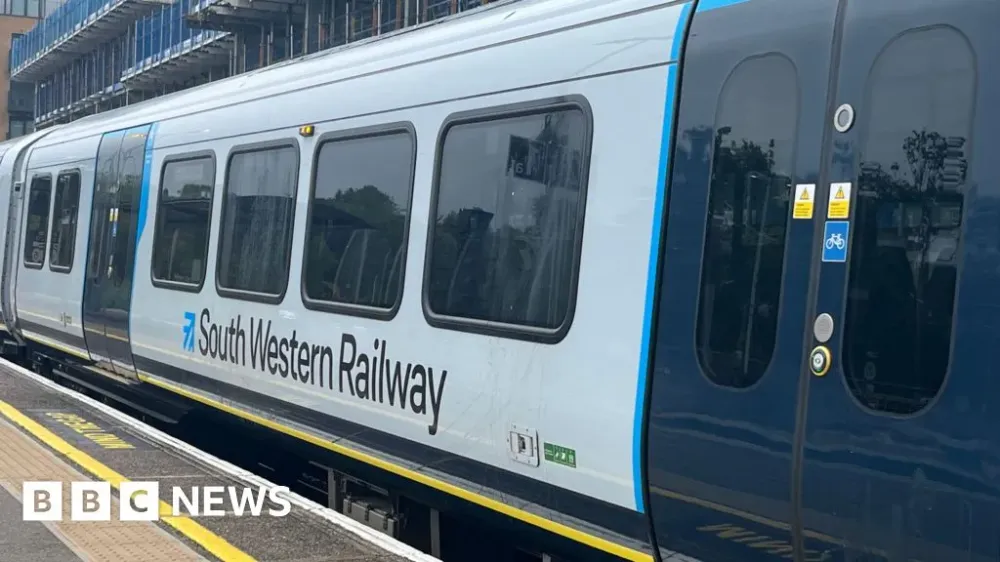
Roughly one in three South Western Railway (SWR) trains failed to arrive on time in 2024-2025, leaving the operator well short of its punctuality target. SWR attributed disruption to causes including "extreme weather conditions and a number of specific infrastructure and trespass incidents".
The Department for Transport (DfT) reported £8.25 million in payments through Delay Repay. Jeremy Varnes, a spokesman for South Western Railways Watch, put the amount higher: "I estimate that in the last year, Delay Repay has actually amounted to about £15m, and that's with the 85% increase in claims in the last year."
Varnes added: "It's an extraordinary amount of money which ultimately taxpayers and passengers are paying for." Campaigners also pointed to taxi and hotel payments as costs beyond the compensation total.
SWR said passengers deserved compensation when their journeys were disrupted. The operator acknowledged the frustration caused by delays and cancellations and said it was working both to reduce disruptive incidents and to restore services more quickly when problems occurred.
Who can claim compensation
SWR passengers become eligible for Delay Repay when a train is at least 15 minutes late. Payments rise with the length of the delay: a 15-minute delay qualifies for 25% of a single ticket's price, while a delay of two hours or more qualifies for 100% of any ticket.
The DfT said fewer than half of eligible passengers claimed their refunds. Separate research commissioned by the department and published in May 2025 put the claim rate at 45%, compared with 47% in 2023. That two-percentage-point fall was the first decline recorded since the tracking study began in 2016.
The scheme's eligibility rules have widened since its introduction in 2007, when compensation started at delays of 30 minutes. By 2025, 18 train companies offered compensation for delays of 15 to 29 minutes, compared with eight in 2018, according to the DfT's Rail Delays and Compensation 2025 report. SWR uses this 15-minute scheme, known as DR15.
Industry-wide figures from the Office of Rail and Road show that operators closed 8.3 million delay compensation claims in 2024-2025, up 9% from the previous year. Of the claims closed, 81.6% were approved, and 99.1% were resolved within the regulatory limit of 20 working days.
Public ownership and service performance
The government returned SWR to public ownership in May 2025, making it the first failing operator taken over in that effort. The compensation figures have prompted questions about how much a change in ownership can achieve.
Daily Telegraph travel correspondent Simon Calder said the payments showed that "whoever owns SWR, there are going to be problems". He linked the rise in claims to infrastructure inherited from the Victorian era, rolling-stock problems and staff shortages.
Speaking to Politics South, Calder said: "The government may possibly come to regret all the big claims it's made about bringing train operators back into public ownership." He added: "Simply bringing it into public ownership does not mean that we're suddenly going to discover that all the trains to and from London Waterloo run on time."
The DfT said issues unrelated to public ownership had affected performance over the summer. It also reported an almost 84% reduction in cancellations related to train crews and a roughly 40% drop in trains operating with fewer carriages than planned.
A department spokesperson said: "There is more to do, but this progress shows how bringing services into public ownership is benefitting passengers".
The wider return to public ownership
Other operators have followed SWR. The Office of Rail and Road's December 2025 access-rights factsheet records c2c's nationalization on July 20, 2025, Greater Anglia's on October 12, 2025, and West Midlands Trains' on February 1, 2026. It listed May 31, 2026, as the scheduled transfer date for Govia Thameslink Railway. The DfT plans to bring all passenger services run under its contracts into public ownership by the end of 2027.
Public ownership has broad support: a YouGov tracker poll cited by the BBC in October 2026 suggested that almost two-thirds of the public backed it for rail services. The BBC also reported annual railway subsidies of around £12 billion, excluding major projects such as HS2.
One earlier transfer offers a mixed picture. TransPennine Express entered public ownership under the Conservative government in May 2023. Its cancellations subsequently fell noticeably, but remained above the Great Britain average in the year to August, according to the BBC's October 2026 reporting.
Stephen Glaister, a former chair of the Office of Rail and Road and now emeritus professor of transport and infrastructure at Imperial College London, said a decade was needed to assess nationalization's impact.