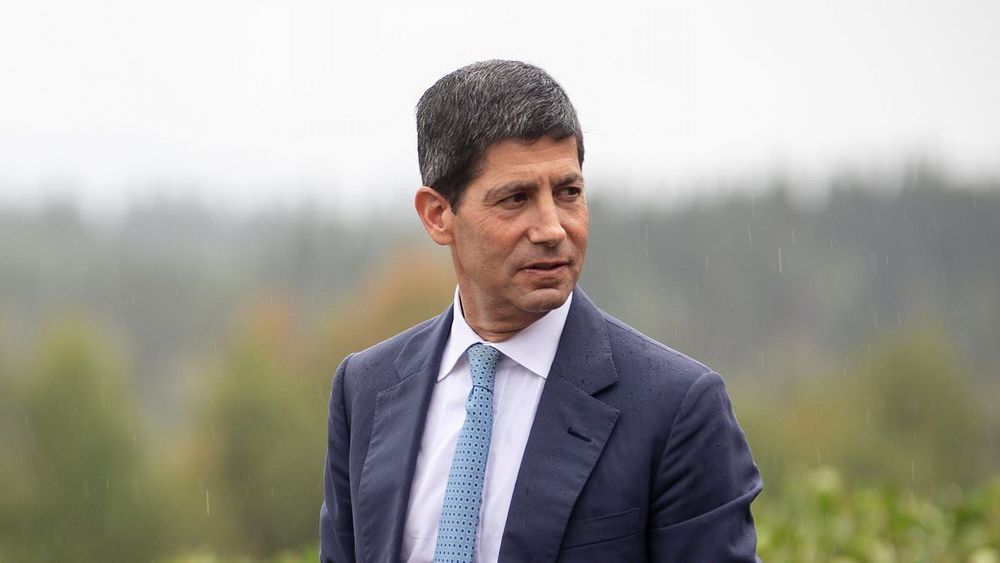
Federal Reserve chief set for rate clash with Donald Trump
Federal Reserve chairman Kevin Warsh faces an intensifying confrontation with President Donald Trump after robust employment figures strengthened the case for raising interest rates, directly contradicting the President's demands for lower borrowing costs.
The US economy added 162,000 jobs in August, significantly exceeding the anticipated 56,000 gain, according to official employment data. The stronger-than-expected figures prompted financial markets to increase bets that the Fed will implement a quarter-percentage-point rate increase at its September meeting.
Trump responded swiftly on social media, writing:
A strong country means a lower interest rate.He escalated his position by threatening to halt trade with certain countries running trade surpluses with the United States unless they reduce interest rates.
The Fed board, with its great new leader, must get smart – be patriots for a change,Trump added.
The public pressure creates an extraordinary test for Warsh, who took office as Fed chairman on 22 May 2026 following a contentious Senate confirmation. His 54-45 approval vote represented the most divisive confirmation in Federal Reserve history, with senators voting along party lines. At 35, Warsh became the youngest person ever appointed to the Federal Reserve Board of Governors during his previous tenure from February 2006 to March 2011, when he helped manage responses to the 2008 financial crisis including the Bear Stearns sale and Lehman Brothers bankruptcy.
The current benchmark interest rate stands at 3.5% to 3.75%, after three consecutive cuts totaling 0.75 percentage points between September and December 2025. However, recent Fed projections signal a shift toward higher rates. Officials' June economic forecasts showed most expect the benchmark rate to end 2026 between 3.6% and 4.1%, up from their previous estimate of 3.25% to 3.75%.
Internal pressure for rate increases is mounting. At the Fed's July meeting, three regional Fed presidents dissented and voted for a rate increase, marking the first time since September 2016 that three policymakers dissented with a unified view on rate direction.
Warsh has already departed significantly from his predecessor's approach by abandoning the practice of providing forward guidance on interest rate expectations, calling it
not well-suited to the current policy conjuncture.Jerome Powell, who served as chair from 2018 to 2026, chose to remain on the Fed Board of Governors until his term expires in January 2028, contrary to customary practice for departing chairs.
Economic pressures complicate decision
The employment data suggests the US labour market remains resilient despite economic headwinds from the oil price shock caused by the Iran conflict. The war, which began in February 2026, disrupted roughly 20% of the world's oil supply through the closure of the Strait of Hormuz, causing Brent crude prices to spike to $118.35 on 31 March.
Kathleen Brooks, research director at XTB, characterised the situation as
a big test for Warsh. She noted:
Trump is demanding the Fed cuts interest rates. How the new chairman reacts will have big implications for the Fed's independence. It will also impact global bond markets.
Last week at the annual Jackson Hole gathering of central bankers in Wyoming, Warsh delivered his clearest signal yet that he was prepared to act against inflation, though he avoided specific policy commitments.
Stephen Brown, chief North America economist at Capital Economics, said:
Even the most committed dove would struggle to find anything in the August employment report to justify keeping interest rates unchanged.
Bond market turbulence
The employment figures triggered fresh volatility in bond markets. UK gilt yields climbed to nearly 5.19%, remaining elevated after spiking to 5.29% on Wednesday – an 18-year high. UK gilts first surged above 5% in late March as a result of the Iran conflict and associated energy price shock, with the Bank of England shifting expectations from two anticipated rate cuts to two or three rate hikes for 2026.
The Fed's rate decision is scheduled for 16 September, with inflation data to be published beforehand providing additional context. Market participants now await upcoming US inflation figures, which will prove crucial in determining whether Warsh follows through on rate increases despite presidential opposition.
Before joining the Fed, Warsh worked at Morgan Stanley from 1995 to 2002, specialising in mergers and acquisitions. His experience navigating the 2008 financial crisis may prove valuable as he charts a course between economic data, market expectations, and political pressure in the current volatile environment.