A narrow congressional battleground
Democrats need a net gain of four seats to win the House, where all 435 seats are up for election. Republicans enter the Senate contests with a 53-47 majority and Vice President JD Vance available to break ties. Trump has made the election a judgment on his administration, telling voters, "Pretend I'm on the ballot."
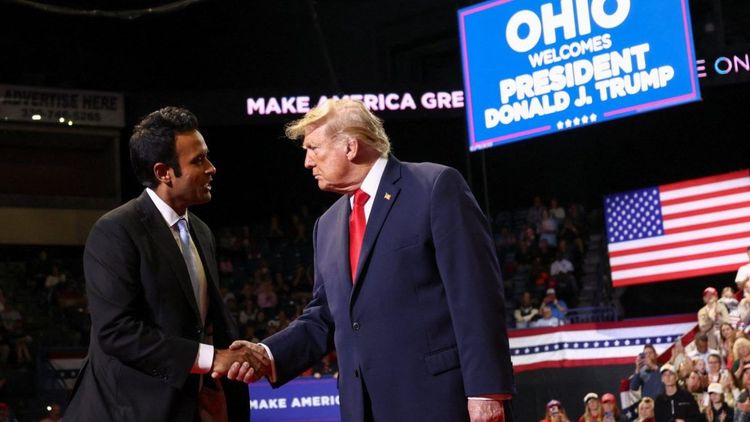
Of the 35 Senate seats being contested, Republicans are defending 22 and Democrats 13, according to an October 9 briefing from the European Parliament Research Service. The Republican seats include 20 regular elections and two special elections: Florida's contest for the remainder of Marco Rubio's term and Ohio's contest to complete the term Vance won in 2022 before leaving to become vice president.
Historical results favor House losses for the president's party, which has lost seats in 18 of the past 20 midterms. Democrats held an 8.2-point lead in the RealClearPolitics generic polling average in early October. But the number of competitive districts limits the reach of a national shift: Reuters estimates that only 40 to 50 House races are genuinely competitive.
The Cook Political Report's September assessment put about 10% of House seats in the competitive category, including 22 true toss-ups and 21 districts leaning toward one party, the European Parliament Research Service reported. Its briefing also identified 71 House incumbents who were not seeking reelection.
What changes under divided or Republican government
A Democratic takeover of the House would give the party the power to block legislation, investigate the administration and subpoena senior officials. Control of the Senate would give Democrats a separate means of slowing or stopping Cabinet and judicial appointments. Major tax or spending legislation under divided government would require bipartisan agreement, which has rarely been forthcoming.
If Republicans retain both chambers, Trump would have a clearer path to advancing his agenda over the next two years. A smaller Republican majority, however, would leave must-pass legislation dependent on negotiations within the party.
Tariffs are less dependent on the election's congressional outcome because they largely fall under executive authority. A change in control of Congress would therefore leave much of the administration's trade policy in place, an important distinction for supply chain planning.
Aluminum provides a current example of those trade pressures. Trump's 50% tariff on Canadian aluminum has driven US prices to a record premium over global benchmarks, according to The Wall Street Journal, as cited by POLITICO on October 27. Canadian smelters powered by hydropower have supplied about 70% of US aluminum imports in recent years.
The fiscal outlook is another part of the planning context. A J.P. Morgan Private Bank analysis published October 19 cited Congressional Budget Office projections of a $1.9 trillion federal deficit in fiscal 2026, equivalent to 5.8% of GDP. By 2036, the projected deficit reaches $3.1 trillion, or 6.7% of GDP, with national debt at 123% of GDP.
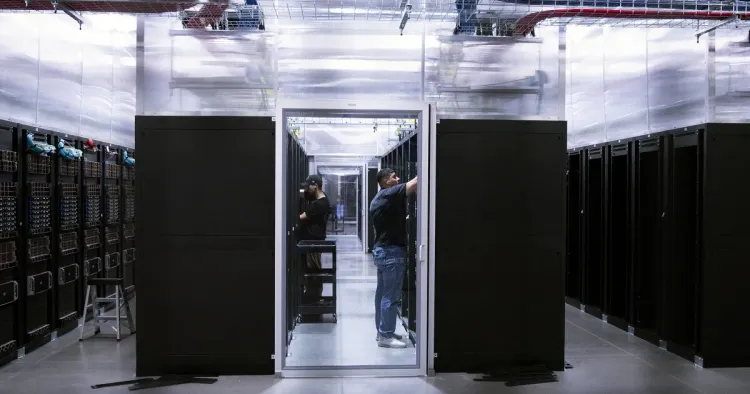
Data centers bring national investment into local politics
Voters will also elect thousands of state legislators alongside the 39 governors. Those offices shape taxes, energy policy, permitting and education systems that influence corporate expansion. For AI infrastructure projects that need substantial land and power, decisions in state capitals can carry more immediate weight than a Senate vote.
The investment involved is economically significant. Fortune reported on October 25 that JPMorgan estimated AI-related investment accounted for about one-fifth of US GDP growth over the year to October 2026. ING analysts expect AI to account for one-third of US growth in 2026.
Local support is far from assured. Half of Americans say they would be likely to oppose a proposed data center within three miles of their home, according to a POLITICO Poll cited on October 27. Respondents were also more likely to support candidates who oppose such construction.
In Loudoun County, Virginia, Amazon abandoned a planned data center development after an agreement with local officials amid resident opposition, Fortune reported. Amazon Web Services had purchased the property for $427 million in February 2026. It agreed not to build data centers there and to repurpose most of the land for residential and mixed-use development.
Expansion continues elsewhere. According to POLITICO's October 27 report, Microsoft added more data center capacity during the preceding 18 months than it had in the previous decade. Microsoft also joined more than 300 companies in signing Trump's Ratepayer Protection Act, a voluntary pledge under which technology companies would bear the cost of grid upgrades.
The wider business agenda extends beyond AI. Living costs lead voter concerns, with implications for consumer demand, while tighter immigration enforcement has reduced labor availability in construction, hospitality and other sectors. Tariffs and the war in Iran keep trade costs and energy prices in focus. A Fox News poll also found that 88% of voters considered government corruption a top concern, raising questions of institutional trust relevant to contract enforcement and predictable rules.
Senate contests and campaign spending
Texas pits Democrat James Talarico against Republican Attorney General Ken Paxton in a state where no Democrat has won statewide since 1994. Spending on the Republican side is around $210 million.
Talarico's campaign said on October 15 that he raised $64 million in the third quarter, taking his total over roughly a year to more than $134 million. The Texas Tribune described the quarterly figure as a record for a US Senate candidate in any state. Paxton raised $18 million during the same quarter. The Tribune also reported that national Republicans had directed more than $200 million into Texas on Paxton's behalf since September, with Elon Musk providing nearly all of that funding.
Ohio's Senate race features Sherrod Brown's bid to return against Republican Jon Husted, a contest to watch for signals from the industrial Midwest. In Maine, Republican Susan Collins faces Democrat Troy Jackson in a state Kamala Harris won in 2024, making the race a prominent test of the national shift.
The election is taking place under changed campaign spending rules. In June 2026, the Supreme Court struck down federal limits on coordinated political spending in National Republican Senatorial Committee v. Federal Election Commission, according to the European Parliament Research Service. Parties can now coordinate strategy, messaging and advertising directly with candidates without expenditure limits.
Preparing for results that may take days
For boards, the task is to prepare responses to both divided government and continued Republican control rather than rely on a single forecast. Legislative priorities and appointments may change with congressional control, while executive trade policy and state-level permitting decisions require separate attention.
November 4 may not deliver a settled result. Tight races, mail-in ballot rules and legal challenges could delay final counts for days, and both parties are already disputing aspects of election administration.